{re}image advent | 12.15.17

To sisters…

To sisters who get you through the day.
Who remind you that you’re not alone.
That call you on your bullshit.
That help you stay strong.

To sisters who swoop in to watch your kids when you feel like you are going to lose your mind…
And to gracious sisters who gently remind you what a sweet gift it is to have children to make you lose your mind.

To sisters who fought for you.
Who still fight for you, in their own way, today.
Who make space for you to chase your passion
and fend off those who would squelch your dreams.

To sisters who sit with you while you cry
and gently place a hand on your knee.
Who bring you food for your bellies
and oils for your feet. Your sick, family of feet.

To sisters who challenge you to keep showing up.
To keep pushing farther.
To keep trying new things.
To keep making space.

To sisters who teach you to receive.
Who remind you that there are seasons to give
and seasons to receive.
And that we all get a turn on each side.

Photo by Caroline Hernandez on Unsplash

{re}image | 12.14.17

A confession and a question…

I am going to be really honest here.

I am “supposed” to start diving into the Biblical narrative today…and I am just not feeling it. I have read the first chapters of Matthew, Mark, Luke and John. I keep having these thoughts about different aspects of the story, but that’s all they are – thoughts.

At one point in time I felt like I had so much knowledge and authority in the way I read and interpreted scripture…but not so much anymore. I almost feel like I need to be a full time scholar to be able to understand the cultural context in which the stories took place as well as the ways they have been read and understood over the years. There is just too much. Sure, you could get a study Bible or a companion book – but those are written from specific perspectives, which means you would have to read multiple different sources to try to piece together some sort of coherent version of the history.

I almost have a visceral response when I sit down and attempt to read it…I am not sure if this is due to the deconstruction or other emotional struggles I am still working through…but I never expected my faith and hope and joy to bounce back before my ability to read scripture…but alas…here we are.

Here is the one question I do find myself able to ask and ponder, and it is helping me to stay engaged, at least in some small way, with the text.

“Why did the author feel that it was important to include this detail in the story?” 

For example, here are the first few verses of Luke 1 (NRSV):
“Since many have undertaken to set down an orderly account of the events that have been fulfilled among us,  just as they were handed on to us by those who from the beginning were eyewitnesses and servants of the word,  I too decided, after investigating everything carefully from the very first, to write an orderly account for you, most excellent Theophilus,  so that you may know the truth concerning the things about which you have been instructed.”

Here is what I would zero in on (today) by asking this question…The author here is exposing intent. The author is “choosing” to add his/her voice to what seems to be numerous others who have recorded the stories of Jesus. Also, he/she mentions that they have been “handed down” – meaning – the author was not the “eye-witness” but rather on down the line. He/she acknowledges the amount of research and work put into the writing for the benefit of a specific audience – Theophilus.

I think it is really helpful to think of the Bible as a collection of writings – rather than one cohesive work. Each book was written by an author with a specific audience in mind (regardless of if you believe those things were written to “apply” more broadly, they were originally written “specifically”).

So, here is my confession for you. I am still really struggling to be in the text. I struggle with the “why” and the “how” of reading and studying. If you are struggling with the text right now – for any reason – you are not alone, friend.

Photo by Aaron Burden on Unsplash

{re}image advent | 12.13.17

I have been sharing and hearing a LOT of my own voice lately. Today, I took a break to listen.

As Glennon Doyle says, “Reading is my inhale, and writing is my exhale.” In my case, I would say reading and podcasts…as much as that makes me sound like a millennial.

I found the historical context around advent in the podcast to be fascinating and refreshing. I think it is a great place to start diving into the Biblical narrative of Jesus’ birth with new eyes…

Alexander Shaia on the Mythical Power of Christmas

Photo by Walter Chávez on Unsplash

{re}image advent | 12.12.17

You can do anything for a four-count…

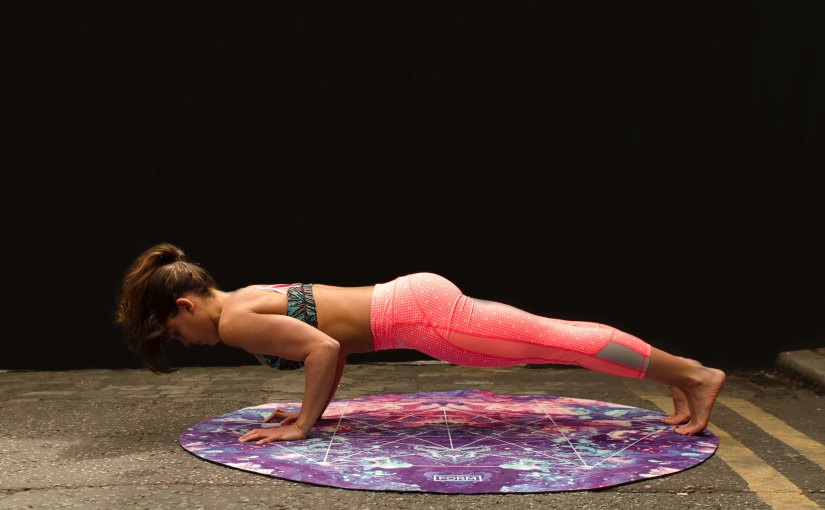
My triceps begin to shake and ache, and it’s everything I can do to keep from crashing on the floor. I’ve been holding a plank in my yoga class, as one of my first acts of belief in the fact that I can, in fact, grow stronger. My core was flabby from two pregnancies and c-sections, and my arms were weak from lack of use. I shook and gritted my teeth and, inside, I begged for the teacher to give me some relief.

Sometimes we’ll get a count, and I’ve learned that if my teacher starts counting down, I can hold it all the way to one…but if it’s just hanging out there in plank – no end in sight – I’m toast. I don’t last very long before I give up. One of my favorite teachers commonly says, “you can do anything for a four-count” and will start counting down from four as she sees us begin to struggle in a pose. (**disclaimer…there is also a very strong guideline of listening to your body and resting when you need too…take care of you…) You know what though? If you never allow yourself to experience the painful, shaky feeling of pushing your edge, you don’t give yourself the opportunity to grow stronger.

This weekend, I was in the midst of a lot of tension and uncertainty. I had unintentionally hurt some people I cared about by speaking my truth. I was hurting, and it felt like my arms would give out at any moment sending me crashing to the floor. Everything in me wanted to relent – to take everything back and just find a way to “fix it” and make everyone feel better. But I made myself hold on. I sat in the tension, knowing that I was holding my plank. I knew it would hurt – and it did. I knew I would waver and want to give up – and I did want to. But I leaned into my support system, gave myself a four-count and stayed true to my own heart. I gave myself the opportunity to grow stronger by living in the tension instead of trying to rid myself of the negative way the tension made me feel.

This has been faith for me the last few years. I’ve shared how some of my questions and doubts began to poke little holes in my embedded framework, and I am not going to tell the whole story during this series…but I do want to encourage you. Along the way, I have wanted nothing more than to erase the tension. I wanted to fix it – and to just go back to how things were – because the tension of uncertainty hurt too much. I was too shakey and insecure. I was afraid I’d crash to the ground.

But instead of crashing, I have finally started to see new strength emerging – in every area of my life. Friends, your pain and discomfort around doubt, grief, and loss is not something to try and fix or resolve – it is part of your formation. We don’t get to chose when these feelings and experiences show up…but if we live into them, stay present with them, and allow them their space to work, they will show us just how strong we are becoming.

Photo by Toby Marshman on Unsplash

{re}image advent | 12.11.17

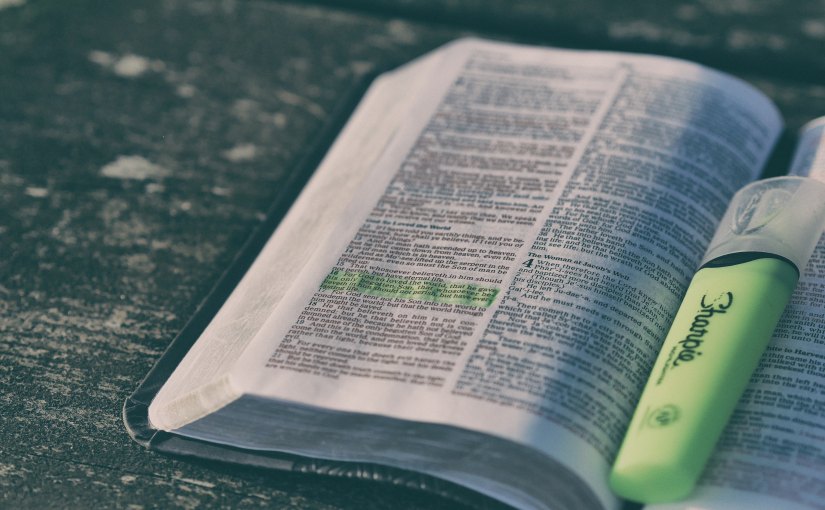
I sat on my top bunk, theology books strewn across the bed and classic Steven Curtis Chapman playing in my headphones. My giant NRSV study Bible turned to a rainbow of yellows, pinks, and greens as my highlighters did their work. I became a religion major during the second semester of my sophomore year of undergrad, and I had no idea what I was getting myself into. “This will be just like extended church camp,” I thought, completely ignorant of the fact that the floor was about to fall from beneath me. It started really small – with tiny nagging questions about authorship. “You mean, Moses himself may have not actually written the Pentateuch?” My margins were filled with symbols and question marks and other confused scratchings of a twenty year old.

I had just never asked questions about what my church had taught – at all. Even seemingly innocent questions, like, “How could Moses have written about his own death,” were earth shattering because I wasn’t used to asking those questions. Sure, I had asked questions about what passages meant, “how far is too far,” and about God’s “will for my life” – but I never actually asked questions about the things that appeared in the liner notes of my teen study Bible. When I started to ask these small, benign questions, I realized that asking questions is part of the process…Someone has to ask these questions, right? I mean, this was first-year religious studies material. So, I started to wonder, if “they” didn’t tell me about these authorship controversies, what else did they leave out?

Cut to canonization (If you don’t know what that means, here is a really concise overview). As I wrestled with the idea of a bunch of people (men…specifically) that chose what was in and what was out, the neat, tidy, handed down letter from God metaphor started to fall apart in my mind. There was just so much human involvement…and I had never thought about that before. Why did we use words like “inerrant” and “infallible” to describe a library of books written and collected by a bunch of different guys long ago to make moral and ethical decisions today? How could we trust that they chose “the right books” and what if there is something they left out?

For a while, I placated myself within my understanding of God’s sovereignty…that God somehow divinely orchestrated the process from afar…

But the questions continued to burrow deeper and deeper. I was no longer able to just take the words in my Bible’s liner notes as fact…I had to do (…wait for it…) some of my own research. I was overwhelmed, a little miffed that I had to revise previous understandings, and terrified about the rabbit hole my questions were leading me into. But alas, I continued to journey deeper.

Photo by Vladimir Kramer on Unsplash


{re}image advent | 12.10.17

As Christmas approaches, I want to turn my attention to the Biblical narrative. Up until this point in the series, we’ve been talking primarily about emotional challenges that can come charging to the surface during this season. Frankly, it is much easier for me, in this season of my life, to talk about emotions than about the Bible.

The Bible, for me, was one of the defining factors in the beginning of my own deconstruction. I had always viewed the Bible as an instruction manual, a rubric, and a template on which to make decisions, judge behaviors, and set priorities. For those of you who may still view it in this way, you’ll find no judgement or condescension from me. I would, however, invite you to try on some new glasses – some new ways of seeing – even if it is just for the next fifteen days. We’ll dive into the stories Jesus’ birth, some cultural context surrounding the stories, and ways in which Christians have interpreted these stories over the years.

First, however, I want to spend a couple of days talking about different lenses with which we can view the Biblical stories – to set the frame for what’s to come.

I’ll start with me (because mine is the only story I intimately enough to share). The embedded concept of Bible as rubric, template, and instruction manual relied on a few deeply-held underlying assumptions. There was the assumption that God verbally inspired these words…meaning, there was no humanity in them…it was all divinity. Sure, human authors wrote the words down for us – but they had no control in what was said or how it was said. Second, there was the assumption that the words and stories written were prescriptive – meaning that they set up standards, rules, and instructions that would last forever. They were not written for a particular culture or a particular time, but for all cultures and all times. I also had the assumption that the Bible, in the form I viewed it in the early 2000’s, was consistent with the form and content from its inception.

And then I became a religion major. And I had to learn about authorship controversies, dating (no…not romantic dating…but when the words were written down), canonization and the controversies there-in (which books were “in” and which books were “out”). It was at this point that I had to face my assumptions. First, it was important for me to become aware of my assumptions. Second, I needed to take a critical look at the assumptions I held. How did my current social, political, geographical, and cultural  location influence these assumptions? Have these assumptions existed consistently throughout the history of Christianity (no…) and if not, then how did they originate? What are some of the different views Christians have held about scripture throughout history? What about before Christianity – how did one relate or understand the scriptures (or the TORAH) in light of purpose, form, function, etc.

And these questions were really hard to address. It was emotionally tumultuous and psychologically insecure. But these were important questions to consider.

More to come tomorrow…stay with me. In the mean time – what are some of the assumptions you hold about the Bible? Where did those assumptions originate for you? In what ways have those assumptions been challenged over your lifetime?

Photo by Aaron Burden on Unsplash

{re}image advent | 12.9.17

Soft and Strong

In yoga, we learn how to be simultaneously soft and strong. To hold poses without creating tension, because of our strength. We learn to engage the right muscles so that each can do the job they were created to do. We learn that contracting certain muscles allows others to release and extend.

This delicate balance of soft and strong is the season I am in right now. It’s always been easy for me to be soft. Sometimes, I am so soft and supple that the shape of me gets lost in whatever container I’m in at the time. I have been a soft place to land, a soft voice of encouragement, and a soft silence when I don’t know what to say.

It is good to be soft. But it is also good to be strong.

It’s the strength we have in certain areas that allow us to be soft in others. It’s the strength we build through years of trial and error, failure and success, work and rest that allow us to step into the container of new seasons without losing our own shape.

I have to work hard to be strong. It is not my natural inclination. Sometimes I have to show strength in one area to continue to be a soft place for people to land. Sometimes, I have to show strength and resolve so that others can experience healing and encouragement.

Sometimes, in learning to be strong…I will forget to be soft. I am learning to have grace for myself in these moments. I am learning the postures, the flow, the rhythm. I am building new strength.

Sometimes I may attempt something I have not yet built the strength for…or at least the endurance…and I may fall out of a challenging pose. I may even injure myself.

But I am showing up to class. I know that sometimes I’ll fall and look weak – or even foolish, but I am showing up to class.

“Be messy and complicated and afraid and show up anyway. All the good and all the beautiful in the world is created by people who show up before they are ready” -Glennon Doyle

Photo by Igor Ovsyannykov on Unsplash

{re}image advent | 12.8.17

During the week I had been (incorrectly) diagnosed with Multiple Sclerosis, I fell apart. I was only a few days postpartum and my hormones were making a difficult situation even more impossible. To complicate things, we had recently learned that another family member was diagnosed with a serious illness, and it felt like the whole world was crumbling beneath my feet. I had run out on some sort of errand, and on the way home I felt the deepest compulsion to eat ALL the chocolate chip cookies. I swung through the chick-fil-a drive through (they have the BEST cookies) and sat in the parking lot of the Target in Nashville West, quietly eating the whole bag and listening to this podcast.

As I listened I sobbed, and on the way home, I realized that as crumbly as life felt in that moment, I was still here and there was still more to come. Good things. Hard things. Life-giving things.

This was only a wave. This was only a set. This is not forever.

I hope this podcast can meet you in the midst of whatever might be crumbly for you in this season.


Photo by Lance Asper on Unsplash

{re}image advent | 12.7.17

Yesterday we talked about self-care – which is the art of taking care of your mind, body, and spirit…but to those of you who are in the thick of grief, darkness, and doubt, I want to tell you something else about self-care.

Sometimes all the care in the world still can’t prevent tragedy. Self-care is important, but it is important in a way that it makes life more abundant, not in that it protects us from pain or suffering.

If you are struggling through a loss or doubt, and you are asking questions like “why”, “what if” and “should I have,” this is for you. In their book, On Grief and Grieving, Elisabeth Kubler-Ross and David Kessler say, “We do things hopefully because they add life to our living, but not with the illusion they will helps us escape death when our times comes.” Because sometimes the cost of “catching it earlier” or avoiding situations that incur risk is never really living in the first place – wasting all of our precious time worrying and plotting and planning rather than really living…and in the end… death finds us anyway.

If you are asking all of those questions, you are not alone. You aren’t. This is a normal part of grief (of any form of loss…not just death). Ask the questions. Sit in them. Befriend them. But at some point, let yourself off the hook. You are responsible for living today and for being fully present to the opportunities in front of you in this moment. Soak it in and find a moment of joy somewhere in the midst of what may feel like a mess.

{re}image advent | 12.6.17

I have a crick in my back. It is a minor thing, but it is one of those small pains that causes a big disturbance. I just can’t stop thinking about it, or trying to pop it or stretch it or otherwise find some sort of relief, but nothing seems to make any difference. Sometimes our bodies are the most reliable indicators of how we are doing – if we will listen to them. Unfortunately, our physical self-care is also one of the first things that we let go of when life gets overwhelming. We stuff our face with chocolate chip cookies. We lay around and binge watch netflix. There is certainly a time for these things, but when you are going through a difficult season (whether it’s grief over a person, an idea, or a sense of community) it is important to eventually come to a place where we start caring for our physical bodies. This is a gift that not only helps us feel better physically, but emotionally. I don’t know if you have ever restricted certain items out of your diet to see how they affect you personally, but for me, sugar makes me anxious. I get hyper, anxious, and cranky (after the initial high). Gorging myself on sugar, however helpful it may seem initially, always backfires for me with a stomach ache, emotional angst, and shame. One of the most helpful things for me in the midst of my anxiety as well as walking through a spiritual dessert has been yoga. Practicing yoga this year is the first time that I have done something intentionally for the benefit of my physical body. For the first time, I have learned how to pay attention to how my body feels, what makes it feel better or worse, and what my body may be telling me. It has given me an opportunity to rest and set intentions for my days – it has just been the best self care for me. Maybe for you it’s something else that will start a domino effect of self care in your life, but grab a friend and try something new. Maybe it’s painting or crafting, or running. Find something that stretches you in a good way – that gives you a new experience of Life in the midst of whatever season you are in. Take time to listen and take care of yourself as we head into the Christmas season that can be so busy and full – especially if there is an extra pain attached to the season this year. As the Bible says in Mark, “Love your neighbor as you love yourself.” If you don’t know how to love yourself well, you won’t know how to love your neighbor well either.

Photo by Marion Michele on Unsplash