Golden Calves and Solutio

It’s hard to know what to do when your heart is split in two

When you have your own complicated relationship with God

Though, less with God…and more with the image of God

The one created and cultivated by me

But also, by the very people who warn not to create an image

Piece by piece, class by class, sermon by sermon

The gold stacked higher and higher

An image of glittering perfection

So separate, solemn, unchanging, firm

Shiny enough to admire my own reflection

In it’s sheltering, familiar form

It wasn’t until I became brave enough

Or maybe more desperation than courage

To climb the mountain before me

Wind blowing me backward

the foundations of the earth shaking

Fire threatening to consume all

But then.

A still small voice.

There was nowhere to go but down

Step by step down the rocky slope

Slowly approaching the shining figure

This great relic of fantasied omnipotence

Cracking, splintering, crumbling before my eyes

And there were choices to make.

To run for a welder, to scrape for some cement,

But if IT wasn’t in the fire, the wind, the earthquake

IT sure as hell wasn’t contained in this statue

No matter how much it grieved me to acknowledge

So I watched it disintegrate

Sometimes with the aid of reckless repressed rage

Other times with the precision of a surgeon

Guided by education and internalized muscle memory

And yet other times it was simply gravity

Following the old, unflinching laws

What sped the process most

Was the ever constant rumbling of building all around

As humans who I know as kind and loving

Keep piling their own gold higher and higher

Panicking as cognitive dissonance dulls an old surface

But choosing to buff it out instead of accept the reality

That their image isn’t so shiny, the reflection not what they thought

And in some ways I understand

Because to lose something so solid

You could see it, could touch it, could feel it

It is a terrible loss.

Even more, how does one know themself

Or know that they know themself

If they don’t have a mirror

But maybe the reason Moses

Or perhaps it was God

Demanded the people grind up the golden calf

And drink

Is because meaningful interaction with the Divine is Alive

It requires a body

It sure seems like this is a theme of this Story

Not to mention…where are we getting this Gold?

It seems like Exodus would indicate it was stolen

From everyday people

Created in the image of God

To create an image of god

That would sooth the anxiety,

Or mend the dissonance of men in power.
Divest

Lately I’ve been teetering precariously along the line of burnout. I have found myself somewhat obsessively on Redfin, Zillow, or AirBnb with this fantasy of fleeing with a destination that shifts daily. Toronto, Denver, Portland, New England, the UK – quite literally ALL over the map. I have racked my brain for months trying do identify what it is I’m really doing with this behavior – because I am about a year away form a professional license I’ve been pursuing for over five years…I’m not going anywhere, at least until my name ends in LMHC. Nevertheless, the sirens are going off full blast begging me to evacuate a sinking ship before I drown with it.

So, here I am putting my clinical skills to work to investigate what I am feeling desperate to escape.

Some days – some moments even – I feel like I can’t handle hearing the word “mom” one more time, knowing that it is surely to be followed by never ending need. And then comes all the guilt for feeling this way and the dissonance in snuggling these babies to sleep and looking in awe at their peaceful faces and wondering what kind of cold heart could feel anything but unconditional love and grace towards them. 

There are moments in the therapy room that feel like the thin veil between the sacred and mundane has been pulled wide open and yet I drive home ruminating on the moments of misattunements or misses. 

I get sucked into a never-ending swirl of shame and powerlessness with every big and small loss that has added up in our world over the past few years and the way I find myself so ideologically distant from the people I love. It is paralyzing. I am equal parts wanting to share myself authentically knowing I am securely loved and wanting to hide out of fear of conflict, more loss, and more distance. 

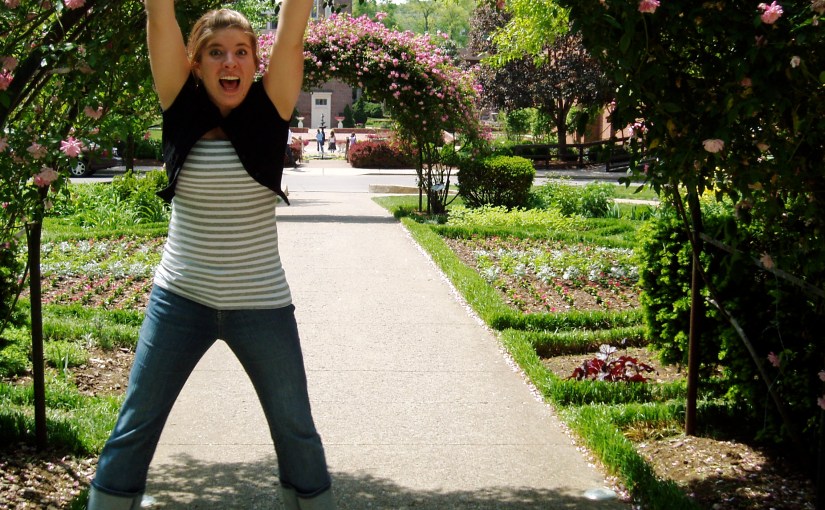
I have been struggling with body shame and recovery from a binge eating disorder I didn’t even know I had until I started working with a dietician around it. I am healing my relationship with food and learning to love my body for who she is while rejecting weight stigma, but sometimes I just want to whole30 myself back to a size six so I can get rid of all these feelings and look like the girl in these picture again.

I want to stop trying to understand our differences and throw in the towel sometimes. I want to give up making space for dissonance and move into judgmental binaries out of the sheer exhaustion it takes to reconcile complexity. 

I have just been hearing the word evacuate over and over, screaming through my head, and as I sit here and breathe some space into it and sink back into my body, I am realizing that the evacuation instinct is internal, not external. My inner landscape as it stands today is untenable, a sinking ship that can’t even pretend to look seaworthy anymore. The ship doesn’t need to be abandoned, it needs to be healed with radical love.

I’m realizing that it’s not really about evacuating – it’s about divesting. Divesting from a cultural and inner narrative that values perfection over peace, hustle over joy, and conflict avoidance over true vulnerable and authentic connection. Divesting from diet culture, colonialism, and capitalism that privilege certain body’s to the great harm of others. Divesting from a belief system that privileges the power of institutions over the lived experiences of bodies. 

So I’ve started doing yoga and trying to get comfortable feeling present in my body. I’m reading The Body Is Not an Apology by Sonia Renee Taylor and taking more walks with my dogs. I’m eating delicious food and taking time to eat the things I want and not only the leftovers from the plates of children. I am investing hours in therapy, supervision, professional development, and work with my nutritionist. I am asking hard questions, leaning into tough conversations. 

If you’ve made it this far with me, how are you divesting? I am genuinely asking both to stoke your curiosity but also because I value the gift of your lived experience. 

Letting Jesus Die

My high school emo kid dreams are coming true and I am going to see Dashboard Confessional this summer. In preparation, I have started to re-immerse myself into this world and in my steamy shower sound booth this morning I found myself belting out, “the grave that you refuse to leave, the refuge that you’ve built to flee, the place that you have come to fear the most.” I was really feeling it, y’all, and in true therapist fashion I started to get really curious about why, outside of nostalgia, that was. 

It came to me really fast this time. It’s Saturday – the Saturday after Good Friday – the Saturday before Easter Sunday. I thought to myself, maybe this is the one day that I get to rejoin my tribe of origin in grieving the death of Jesus. I had to steady myself a moment. This is the one day in the Christian tradition where Emmanuel, “God with us”….was decidedly not there. I can’t count how many times I have heard the adage that you can’t have Easter without Good Friday – mainly, you can’t enjoy the celebration without the grief. For these moments, for this day, I feel once again connected to a stream that feels so very long ago and far away. Alas, tomorrow will come, sunrise services will commence, and Christians will go back to “normal”… where Jesus is “very much right here with me and on my side.”

I will go back to feeling, once again, feeling like a living exile. 

But I have gotten to thinking about it. One of the biggest gifts of letting go of a literal interpretation of the Bible is that the meaning actually gets larger, wider, and more significant – not less. Could it be a historical event? Yes, and…even if it isn’t, there is a deep truth here. There is a truth that Jesus has to die before resurrection can come. 

The Jesus, the savior that was expected to be a religious and political leader. The Jesus that was on our side and was going to take care of “those people” once and for all and return us to our “proper place” in the kingdom. The Jesus that would validate our judgments about our enemies and our own sense of righteousness. That Jesus died. It was our vision, our interpretation, our expectation, our projections. It seems, however, that a lot of us are still holding REAL tight to this Jesus. The Jesus we were taught in established institutions, the Jesus that feels deeply embedded in our narratives, the Jesus we’ve always carried with us. 

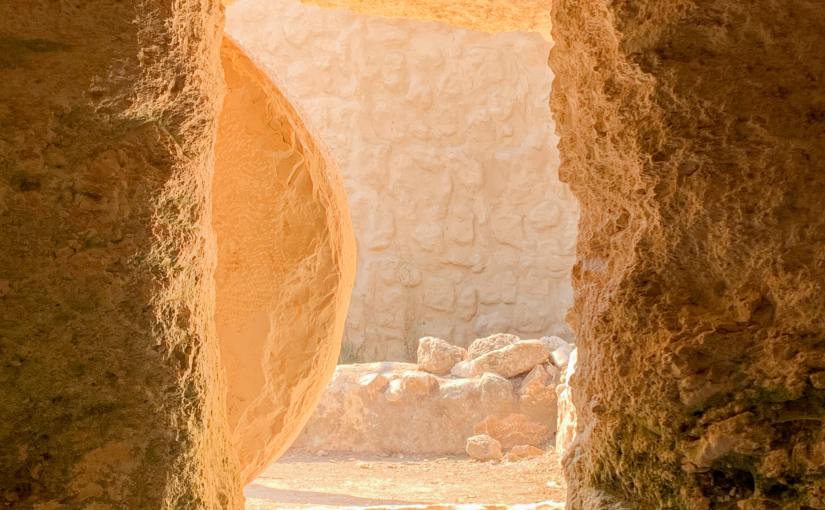
So, like Mary, we hang out in the garden – the familiar place where it “makes sense” to look for Jesus. In our grief, we often cling to “the closest we can get” as an understandable way to mourn the distance between ourselves and the beloved that we have lost. But what about, “he is not here – he is risen?” What about Mary mistaking Jesus for the Gardner – surely one this intimate with him would recognize the person she most dreamed to see…

Sometimes resurrection doesn’t look like we expect. We expect to see Jesus in the garden. We cling to the places where we used to see him, to feel him, to find him. But maybe he is not there – maybe that is not where we will find him now. Maybe he is doing something new. 

This is the third year (outside of COVID) that I will not be attending church on Easter. The other two Easters I was in labor. I was fraught with struggle over this decision, but as the water streamed down my back to the tune of 00’s emo this morning, I felt a familiar sense of peace. If I were to go to church this year it would be for one reason and one reason only – so that I don’t disappoint people or let them down. I am learning in this season of life that while those I love have every right to be disappointed and even to grieve that who I am is not who they dreamed that I would be. I also have every right to continue to discover, embody, and share who I actually am – no who I felt I was supposed to be. No, I won’t be in church this Sunday, but I will be celebrating the resurrection and I had to let my old understanding of Jesus, my old identity, my old defenses of people pleasing – I had to let them die to get to Easter morning. And it has been painful, and frightening, and exhilarating, and new. And Jesus is right here in the new with me. You’ll find me tomorrow in my garden, relishing with gratitude some time with people I love, and being brave enough to imagine something new.

Wild Geese and Ruffled Feathers

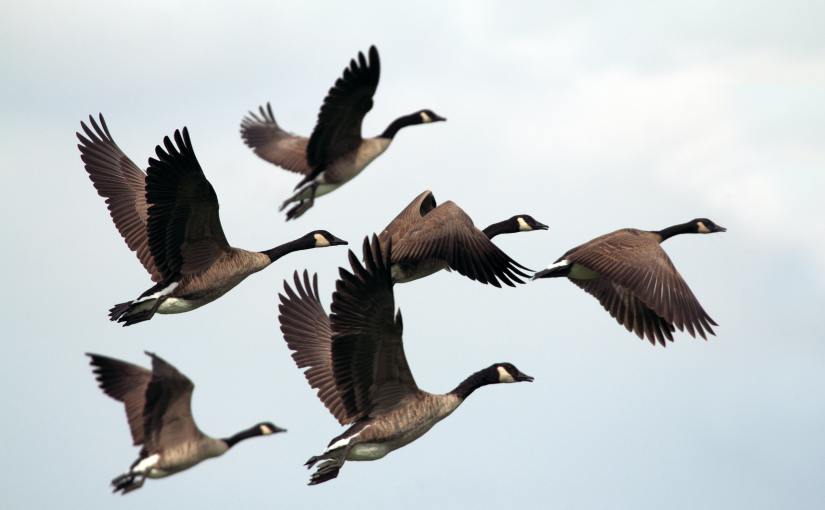
For some time now, I have been completely in love with “Wild Geese,” a poem by Mary Oliver – so much so that I have seriously considered a goose – related tattoo. The image of geese flying in a soaring “V” or a beautiful individual feather have been contenders as something I could carry on my body that would keep the words close to my heart.

But I kind of hate geese in real life. I remember impatiently waiting and fruitlessly honking as geese flooded the parking lot of my apartment complex, blocking the only exit. When my anxiety was finally managed well enough that I could go on walks by myself, I found myself rounding a corner of the path only to be face to face with a whole freaking flock of geese. I tip-toed around the poop-covered pavement and desperately tried to give the animals a wide berth, but apparently it wasn’t wide enough and this big scary dude started hissing at me. So I ran – like a damn fool whose brain apparently thought this goose was wielding a knife or some sort of deadly weapon. I couldn’t even walk the path home and ended up cutting through someone’s vast muddy pasture in an effort to avoid…a goose. 

Geese are just one of those things, for me, that I love, wonder, and marvel at from a distance but absolutely despise up close. They terrify me at a very primal, inconquerable level. 

I think the reason this poem has become one of my closest friends is the first line “you don’t have to be good.” If you are like me, you’ve never really felt the truth of those words. Being good has always been a given, and expectation – a lifestyle. No matter what the choices, the consequences, the cost the answer is always to be good. Anything that impacts my ability to identify as “good” (by myself or others) at ANY time is perceived as an existential threat. If I am not good – all the time – my very sense of self will be anihillated. I am constantly ruminating on every word, conversations left unsaid or overstated as if I believe that ruffling feathers threatens my life.

Being good looks beautiful from a distance. It sets us up for approval of others, to feel secure in our belonging – both with society and within our understanding of God. It seems uncompromisingly beautiful and laudable. But get up close for a second. 

There is an insidious cost for “being good” that can be overlooked when we are at a distance. The energetic cost of filtering every thought, behavior, and plan through what would be “good” or avoid ruffling feathers can actually relieve us of the capacity to be present – with ourselves and with others. It can actually be a form of inauthenticity that keeps us from knowing and being known for who we are – from true connection. 

What a different task it is to be alive in love. To choose trusting the Love inside of us instead of the constant calculating of appearing “good” to ourself and others. 

It’s an invitation to do less and live more. 

Wild Geese, by Mary Oliver

You do not have to be good.
You do not have to walk on your knees
for a hundred miles through the desert repenting.
You only have to let the soft animal of your body
love what it loves.
Tell me about despair, yours, and I will tell you mine.
Meanwhile the world goes on.
Meanwhile the sun and the clear pebbles of the rain
are moving across the landscapes,
over the prairies and the deep trees,
the mountains and the rivers.
Meanwhile the wild geese, high in the clean blue air,
are heading home again.
Whoever you are, no matter how lonely,
the world offers itself to your imagination,
calls to you like the wild geese, harsh and exciting –
over and over announcing your place
in the family of things.

Photo by Gary Bendig on Unsplash

Living In Different Worlds

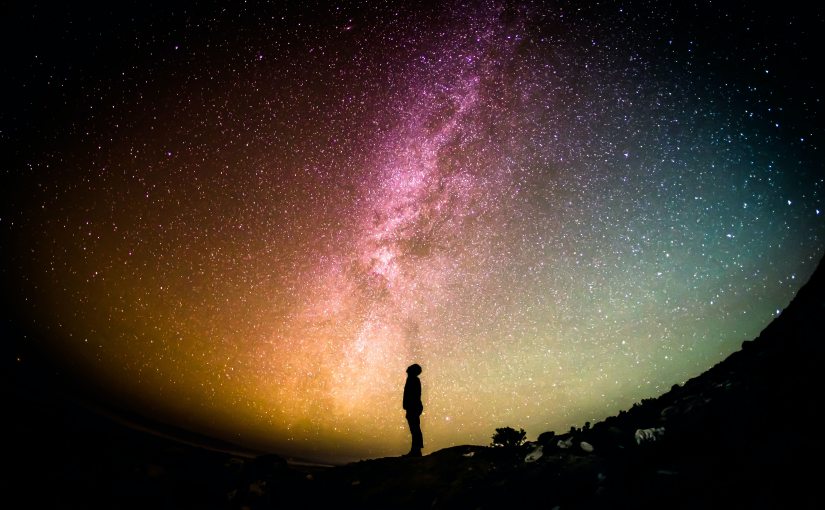
I spent my professional week navigating multiple realities – the imaginal exploration of the varied inner landscape of clients, the “work mode” that can shut off or alter, if but for a brief fifty minutes, the constant prattle of competing thoughts and emotions tussling for space in my consciousness, and the real-life relational realities cultivated in the space between myself and those I love. Most of us have this capacity on some level – stemming from our youthful bounding from princess dancing with the prince, to zookeeper, to doctor, and then back to child sitting in her bedroom. The interplay between these worlds can bring wonder, creativity, joy, play, learning and more, but it can also lead to an uncomfortable amount of cognitive dissonance. What’s more, the part that was able to become the zookeeper and the doctor – she’s still in there somewhere. So is the part that failed a math test, the part who got her heart broken, the part who tasted rejection, the part that fell in love, the part that welcomed a beautiful baby, and the part that gasped in the back of an ambulance in existential fear. We bring all the parts of ourselves with us, and they form a complex network of knowledge, experience, and defensive and adaptive strategies and responses that try to protect us from re-experiencing failure, heartbreak, rejection, and death. We exist in a constant dance among different worlds, conceptions of reality, experiences,  affects, and defensive and adaptive strategies without even knowing, or often even noticing, the complicated steps. “We” are not a stagnant, consistent, tangible, predictable entity, but a million constellations constantly moving, expanding and interacting within the universe that we call our “self.” We are moving targets. 

Perhaps this is why it’s so easy to lose ourselves, and each other. We don’t know who we are speaking to or from where we, ourselves, are speaking at any given moment. 

I don’t know about you, but when I get on social media these days (and let’s be honest, we rely on it a lot more during COVID winter when we aren’t gathering with friends as usual) I can feel my throat tighten with each post I read. My heart starts to race, my fingers begin to tremble, and a feeling that’s not quite panic, but nearer to that than any other word I can access right now, rises steadily within my body. I am not a static “me” reading these posts – I am my fears, my defenses, my need for tribal belonging, my longing for justice, my level of hunger, my level of sleep, the number of days I’ve gone without seeing friends, the tension I feel around parenting, the past experiences I’ve had in conflict and disagreement – I am all of these things, and I would wager you are to. 

So what are we to do? How do we peek into the swirling abyss of “person-ness” in a way that makes contact, creates connection, and communication in the way that we are longing for? First, it takes self exploration to learn to identify and chart the nuances that make up our own internal universe so that we can identify from whence and where we are speaking in that moment. We map the stars on an ever-expanding plane that includes a lifetime of experiences, relationships, feelings, and evolving beliefs. What does it feel like to occupy a space of fear? What does it feel like when our 12 year old is coming up to protect us from rejection? From where does this sense of shame I am trying to protect myself from derive – is it a system of belief I held as a child or is it a present value with which I am in conflict? It’s a never-ending adventure navigating through this wondrous journey of being and becoming a person. 

Once we have an idea of what part of us is currently running the show, we can attempt to cast our line out to the other person – but not without a similar spirit humble curiosity about who it is that may respond to us. I hope, that by endeavoring to communicate amidst this type of mutual curiosity, we may create space to see each other, to hear each other, to empathize with and humanize each other. If someone responds from a defensive posture, there is a part of them that is feeling threatened or unsafe – and it may or may not have ANYTHING to do with you, and this knowledge may help to cultivate empathy that leads to greater understanding, or at the very least – grace. 

We can’t control from whence and where people respond to us, but we can know ourselves. We can discover what it is that provokes our defenses and our own self-protective aggression. We can learn to find empathy and compassion for ourselves and the moments in which we are not in a space to receive any input at all from certain people in our lives in a way that would further connection or understanding between either party. We can explore the ways in which our values have and continue to grow and develop and the ways they intersect with the way we live, move, and act in the world. When we learn ourselves well enough to discern and live into self-compassion, we will also have the ability to show true grace, compassion, and love to others – even those who we feel like live in an alternate universe. In a way, in fact, they do.

I choose the garden.

The souls of my shoes made a satisfying crunch as I made my way along the leaf-covered pathway toward the dock that has become my steady place of sacred ground over the last four years. Before rounding the corner, I noticed a single duck floating in the pond beside me. “Huh,” I thought, I don’t usually think of ducks as solitary creatures. My mind began to wander down my own internal hiking trails pondering what it means to be a social creature alone, bringing up the dissonance churning in my stomach at feeling quite distant from my own pack in this season of 2020. Usually I have a stroller full of twenty pound, fire-charged estrogen and light to push along on my walks, but today the nap stars aligned and I found myself alone. I quickly became aware of one of the gifts of walking with this companion as, in her absence, I failed to stop and marvel at each stunning, simple pleasure I passed along the way – a vibrant purple flower, the gentleness of a soft breeze moving across my skin, the nearness of a statuesque squirrel, or the distant yet distinct sound of the rooster crowing at the house I always envy when I pass by. It was strangely quiet. 

As I observed a sense of sadness at this absence, I was also able to reengage with the part of my mind that is constantly looking for these pleasures to call out. I stopped naming the experience, but I, instead, simply lived the experience. I relished in the warmth of the sun and found joy in the skittering of rodent claws high overhead. I noticed the way it felt to take a deep breath and felt a depth of gratitude for the space in which I was inhabiting. 

Once I arrived at my destination and became present once again with the energetic dissonance that desperately needed a way to crawl out from the thinly worn barrier of my body. I thought about the rhetoric that makes my flesh crawl, and sadness at my utter inability to reconcile the source and audience of these words with the narratives that formed me. I was raised to believe in a story, and wander though I may at times, it is still the scaffolding by which I orient myself. This is a story about a garden. 

God, like an artist shooting up from bed at 11pm because the inspiration was churning and demanded expression , created this garden. God filled the garden with an immense diversity life and named the entire thing good. Then God created humans. From the narrative, it would seem that the role of humans was to be the consciousness – the experiencer of the experience. God gives these experiencers the task of noticing, calling out, and naming each aspect of creation – a task I find myself continuing as I use language to model for my daughter the gift of experiencing through noticing and naming on our walks. It’s innate in us, this ability to notice, name, and assign meaning. God called all of this good, and sent the humans forth to experience, enjoy, and flourish. 

There was a warning, though. There was this one particular tree that they were never to eat from – the only prohibition in all of creation. The story calls it the tree of the knowledge of good and evil.  It was not called the tree of evil, or the tree of the devil, or the tree of sin. It was the tree of the knowledge of good and evil. The story’s antagonist, of course, attempts to lure the human experiencers to taste of this tree with the promise that they will be like God – that the knowledge, or certainty, of what is good and what is evil is God-like: Powerful. Just as God warned, after tasting the fruit of this knowledge, the humans lost the privilege of simply enjoying the garden. 

Many people view this story as a time-limited, chronological event, but what if it is more than that? What if this is an invitation and a prohibitive warning that lives in perpetuity. The invitation: live, experience, feel, enjoy, abide in the entirety of this creation. The warning: if you are enticed by the fruit of this tree of knowledge, if you want to claim the power and authority to name what is good and what is evil – the result will be separation, death, and destruction. 

Certainty is power. It is the ability to have the answers, to reassure ourselves that we are the “good” ones, and to craft narratives that are coherent and cohesive. But certainty is not without a cost – and the cost is separation and destruction. Death – not in the way of the physical body, but of the ceasing of our ability to simply abide, purely enjoy, and wholly experience. 

You can choose to live amongst the bounty of the entire garden, or you can choose the one tree, the power to claim Ultimate knowledge, Ultimate judgment, Ultimate certainty. 

Myself, I choose the garden. 

Dissonance

For some reason, last night, I turned on the vice presidential debate. I knew it would bring up unpleasant feelings for me, but I wanted to at least see some if it for myself and not just read the summary later. Well, I wasn’t wrong. About a minute in to watching Pence’s face and my stomach started to churn. All of these angry thoughts (which I’ll spare you from) arose and their presence in my mind made me physically sick to my stomach. Because I work in therapy and am always curious about the “why” underneath my feelings, I sat paralyzed and churning on my bed wondering about the curiously strong energies swirling through my body. There was definitely some fear about what might happen in the next few months, as noted by the tensing of muscles and increase in heart rate – and I am sure that fear was probably felt by most (not matter what “side” you are on). But mostly what I felt was the urge to explode all of these nasty, vicious thoughts somehow. I wanted to get on facebook and write sharp, tarted arrows with which to discharge the anger and the blame and get those nasty feelings out of me and into others. So I sat with that for a moment. Would that be helpful to anyone? Would that cause any change? Would that ultimately even make me feel better – probably not, as I have certainly gone this route many times before and am familiar with the terrain. 

What arose next was somewhat of a surprise – it was heartbreak. Not just sadness, heartbreak. While it feels “acceptable” or even maybe pleasurable in some twisted way to spew anger, the more vulnerable truth was that while I was feeling anger, I was feeling anger because I was having to sit with this heartbreak. It was a heartbreak of realizing how distant I felt from people I love. It was a heartbreak at having to hold the dissonance carrying people in my mind who I love, respect and admire in innumerable ways and also whose choices, as I see day after day in the therapy room and in the world, are so harmful. And I know with every piece of my heart that these good, loving humans do not intend to cause harm. And I feel powerless, because I am holding the harm and love at the same time, in the same hands, and what I am left with is dissonance. 

I do not and will never understand how people who I truly know to be caring, compassionate, and empathetic can support an administration that openly refuses to denounce white supremacy, an administration that says that uncovering our implicit bias (which EVERY HUMAN ANIMAL HAS, by the way) and working to mitigate it’s effects is “harmful and offensive” in some way, an administration that openly objectifies and dehumanizes immigrants and refugees, and most importantly, an administration that openly rejects the well-researched, well understood implications of systemic racism on humans in this country. And I am saying all these things right not with a tone of anger, but with true and genuine confusion and sadness. There many differences between the parties and the ways in which they navigate finances as limitations of government, when in looked at in a vacuum can certainly be widely and fairly debated, but lets not pretend that these larger systemic issues are not also tied in to each and every one of these decisions. Who will benefit from these decisions on a large scale? Who stands to be harmed? 

I don’t deny that this is a difficult, and maybe an impossible election year to navigate. The options are fairly crappy. We have to do better, friends. I refuse to believe that America can not be better than this.

I have all these thoughts about Spirit and Certainty, and how much people love the safety and avoidance of dissonance of clinging to dogmatic, black and white responses and how maybe the “tree of the knowledge of good and evil” in our time is just that – certainty. So, I’m coming with an open mind. You are not going to change my mind about who to vote for and I’m sure I won’t change any of yours because as strongly as I feel my convictions are driving me, I know yours do to. I would, however, be so curious and open to know how others understand this dissonance – whatever “side” of it you are on. 

Seek first to understand…

I have been really angry lately, and like so many of you my usual coping skills aren’t always available to me due to COVID. These days I can pretty much measure my level of affect by how far out of my way I am willing to go to get sweets. Today was a soda and chocolate chip cookie day. The world is tough for empaths right now, and my capacity for holding the feelings of others is wearing thin – thin enough that I have had to set pretty clear boundaries in order to keep loving my family as well as I can and showing up with compassion in my work. This thin layer of emotional capacity with which I skate is why I have been quiet on social media about some things that really matter to me, and I wanted to put some things out there.

First of all, black lives matter. I am heartbroken not only about police brutality (which, by the way, is in no way a new story) but also the continual learning and unearthing of systemic racism, both from within and without, that has taken place for me over the past four years. If you don’t believe systemic racism is real then I don’t think you are hearing the cries excruciating pain people of color and indigenous humans are trying to express here. Listen up.

Second, this pandemic situation is hard. That’s it – it’s just hard. It’s hard for the people who are losing people. It is hard for the people making decisions about school and parenting, teetering on the edge of financial crisis, and drowning in options that feel heartbreaking and impossible. It’s hard for people stuck far away from family where the decision to love means the decision to be apart. We have not all experienced the same amount of loss (as if loss could somehow be quantified) but we have all lost something, and this global collective grief is uncharted territory for us all. We are all learning how to live with this in real time.

Third, good gracious election season is upon us. I can’t open social media without wanting to hurl my phone across the room, and I am sure the people that make me want to hurl probably want to hurl me too. I feel like we are in a sea of crappy options once again – of course I have a really strong opinion of the lesser of the evils – but that is not the point today.

I want to talk about how we listen to each other. I will clarify now that I am not asking you to empathize with the wearer of the boot that is on your neck. What I am asking is for all of us to listen for the pain. When you see something that makes your blood boil on social media, ask yourself where the pain is – for you and for the person/side/party/entity you are in “dialogue” with. We can argue opinions until we are blue in the face, but feelings aren’t up for debate. If someone is feeling hurt, they are feeling hurt. It does not get us anywhere productive to ignore or debate the hurt or the fear at the root of the “argument.” Of course, there is still room for debate and discussion about action, justice, and solutions, but could we do it while assuming the humanity of the other persons involved? Can we assume that if they say they are hurt that we can believe them and learn more about their pain? Can we remember that we are dealing with a person in pain or a person in fear as we process and metabolize their behaviors and responses with this in mind? It’s time we stop reducing people to their identifications. We are not robots, and there are hurts, fears, and hopes that underly all of our behavior.

This is not a “we’re all in this together” and “we can solve all of our problems with kindness” message, because I don’t believe we should expect or ask for people to handle their real pain only in the way that would be most convenient for us. I am simply advocating that as we interact with each other, argue with each other, work together, and even fight hard with each other that we remember the humanity of the person on the other end. Systems are made of people, but individual people aren’t systems in and of themselves.

As I sit amidst the flicker of mosquito torches to give space to the noise in my head, this phrase comes to mind – “Seek first to understand, and then to be understood.” It’s a quote by Stephen Covey, and it took forever for me to remember where I heard it or why it was so quick to pop in my head, but then I realized it was one of the leadership habits taught in my kids public school. Let’s see if we can learn from our first grade friends.

**Even as I type I now there are things I am missing. To quote Brené Brown, “I not here to be right, I am here to get it right.” Here is blanket permission to lovingly call me out on my blind spots.

from a socially distant enneagram 9

I curled up on my husband’s lap after bedtime tonight like a small child, and that’s how I felt – small. Small in the midst of a global pandemic. Small in the midst of the greatness of need in my own home from three little people seeking a new sense of normal. Small in the midst of the gnawing grief of cancelled plans, disappointment, and other losses that stack up every day. Small under the weight of my own empathy, and the way I carry all of this sadness in my body.

When feeling small and vulnerable, my brain body system jumps back to the way it has navigated smallness before, as a child. I look to those around me for the rules, for the expectations, for the people who I respect to give me some sense of certainty in the midst of so much haze. I am looking for rules, for black and white answers, for guidance.

The guidance abounds. Social distancing, stay six feet apart, hole up in your home, do your e-learning, stay in some sort of routine, stay grounded for your kids so they don’t become anxious, soak up all this time with your family, don’t worry too much about e-learning because you are making precious memories, don’t go to the grocery store, stop eating your feelings, get outside, get some exercise, support local businesses buy ordering food, check in on your friends and neighbors…there is a list a mile long of all the “should’s” – some complimentary, some contradictory, some probably healthier and more helpful than others, but a lot none the less.

And in this looking out, I forget to look in. I forget that I am not a small, helpless child but a full grown woman. I can look outside for all the guidance in the world, but then I get to experience the beautiful magic of internalizing what I have learned, what I know, what I believe, and deciding then, for myself, what is best in this moment.

How can you take a moment to listen to your own voice today? We are a social species, and seeking acceptance and belonging is deep in our bones – but we are also an embodied creation. Your body, if you listen to her, will tell you where to go. Your body may need a nap. She may need you to let the kids play a little longer with their iPad or video game so that she can breathe for a moment. She may need you to cry, or to eat a little extra food. She is, in fact, in the midst of global trauma. She may need to sit and experience the sadness she is feeling or rail at the decisions of our leaders. She may need to take a break from trying to be productive and be a good “at-home” worker to have a dance party with her kiddos. She may need you to bundle up and sit outside in the rain just so you remember that life extends beyond the walls of your home. She may need to do something with all of her grief – make masks, or donate milk, or give blood. She may just need for you to be still for a moment, even if that means locking yourself in the bathroom away from the chaos of beautiful children. There is a Divine voice in there whispering, embedded in each breath. You have listened to her before – you know when she is hungry and you choose to feed her. You can hear when she is tired and needs to rest. You can feel when she needs to curl up on the lap of someone she loves so she can feel closeness and safety.

What do you need today? What sensations do you notice in your body when you try to sit in stillness for a moment? Or are you in a place where you are keeping so busy, so distracted, that you have a hard time even deciphering the sensations your body is experiencing right now? That is a normal and adaptive trauma response…it’s like an internal “flight” response. Just notice that – notice it and go with that.

Sending love and a reminder that no matter how many “should’s” you have piled on you right now, you are ultimately the one who decides which of those stay and which go. You are allowed to need what you need today, and you are free to be exactly where you are.

Photo by Sharon McCutcheon on Unsplash

Learning how to move…

Baby girl sits about 10 feet away from me and screams. She reaches and points and uses everything in her pre-linguistic communication arsenal to get her message across. “I don’t want to be here. I don’t want to stay in this position. There is something or someone over there that I want.” As her mom, I want nothing more than to swoop in and pick her up “solve the problem.” I want to take her where she wants to go, move her to a different position or circumstance, and being into reach whatever she is currently seeking. Sometimes, I feel like I am being cold or uncaring by not moving her.

I feel this way as a therapist sometimes too. Sitting across from people who are suffering or stuck or lonely. They don’t want to be where they are – that’s why they are in my office. Their position or way of being in the world has become uncomfortable or untenable, or they can see something good just outside of their reach and they want to get to it. It is so hard for me to not want to grab them up in my empathetic arms and to try and guide them somewhere new…but that’s not my job, and for me to do so would not be serving them. So I let them feel what they are feeling, explore what it is that they are missing or wanting, wonder and discover what it is that keeps them stuck, and support them in the process. I get insecure, though, if I don’t feel like I am “doing enough,” for them. Sometimes, I think clients (and probably baby girl) think this too, and wish that I would just fix it already.

This, however, is not how therapy works. El’s physical therapist pushes her and challenges her, and because she is a baby, she cries. Being in positions she is not used to, moving in new directions, and using her body in a different way is uncomfortable for a while. The therapist, however, reminded me this week that El’s biggest struggle is remembering that she can move. She has done a lot of work and she is so strong. The muscles are there, and toned, and they know how to do it- she just forgets that she knows how to move…and so I stay where I am when she cries, and I get down towards the floor and encourage her to come. I clap and cheer as she starts to take some tentative crawling steps forward, and I get to enjoy her smiles and glee as she realizes that she was able to propel herself.

This is true in psychotherapy as well, my friends. It’s not my job to pick my clients up and move them, it is my job to encourage them and remind them that they can move. We can talk about how to move, plan for movement, strengthen muscles and try out new positions, but the goal is not for them to get from point A to point B, but rather for them to learn how to move when they want to. It would be so disempowering for me to try and do the work for them, and it may even communicate that I don’t believe they can do it – that I don’t know they can move or trust that they have what it takes.

Sometimes we just need to be reminded that we can move. To friends like me working through stuff in their own therapy, I hope you have a clinician who cheers you on and helps you to remember that you have agency. To my friends who are feeling stuck or hurting or out of reach from the thing that they desperately want to hold on to, I hope that you find someone to scream yay as you take each little tiny baby step. To those who experience this with friends and family, who you want to pick up and move or fix or remove their suffering…maybe let’s think together about how we can instead help our loved ones find their own strength and remind them they have what it takes to keep moving  💕


Photo by Jordan Christian on Unsplash