You see something on Facebook that makes your blood boil. “How can people still think like this,” you wonder aloud. What do you do? Do you call a friend to vent? Do you leave a scathing comment? Do you use an angry face emoji and then walk away, still fuming over it as you go about your day? Do you go to your own profile and post a passive aggressive plea for decency in the face of “such nonsense”?
I have done all of those things…multiple times.
When I post my own political or religious thoughts, and someone comes and likes it or comments in support, I get a little bit of a rush. We really like it when someone validates our deep need to feel like we are good – to feel like we are on the “right side.” There certainly is objective evil and injustice in the world, and we should speak out against it. I am simply inviting us get creative in how we engage with one another.
Next time you see a post like that (especially if it is someone you know or care about), I would invite you to look at it this way. What are the feelings and emotions behind the person’s words? Is it possible for you to look at the feelings (not the words or content) objectively? Could it be that what looks like blatant racism (and probably is) is also a human trying to communicate fear or loss in some way – this doesn’t make it ok, but it may make it easier to dialogue with.
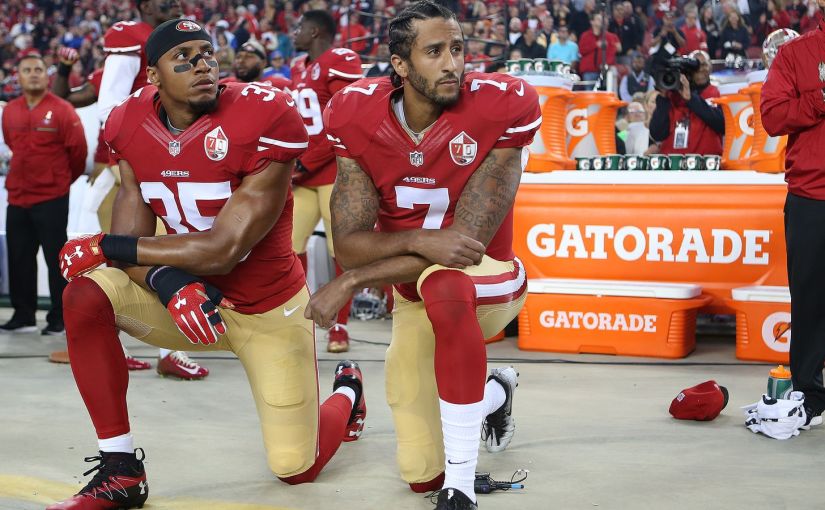
Let’s look at a particular example. A couple of weeks ago, when my Facebook feed was filled with friends posting angry words against those kneeling during the national anthem, I had enough. I got mad, I sat down to my computer and vented in a Facebook post. As comments came in, most were positive but a few were negative. Some were even downright personally hurtful…but instead of biting back, here is what I chose to do. I chose to sit and think about how my angry friends were feeling. What experiences, relationships, and suffering have they endured that have led them to this space? These are generally very kind people – they must have been feeling hurt to respond in such a hurtful way. I apologized where I felt I had inflicted harm in one way or another, and I continued to advocate for what I believed to be true.
Looking at these feelings allowed me to see beyond what my friends were saying, and to attempt to respond appropriately to their feelings, without conceding the argument. I am not saying I did any work towards changing anyone’s mind – because I am not delusional – but my hope is that I can model a style of respectful dialogue in which people who differ greatly politically and religiously can still form meaningful relationships (without sacrificing their convictions). I know enough to know that face-to-face relationships with people who are profoundly different from yourself are how your opinions and perspective broaden, and not persuasive arguments. It’s hard to hate someone up close.
I want to clarify that for those who have been marginalized, abused or oppressed, I am not asking you to empathize with your oppressor. What I am doing is trying to promote a new way of communicating. Sometimes it feels like language just gets in the way of communication.
So, how do you discern what sorts of feelings might be behind someone’s emotionally charged post? First, you use your imagination. You do what you can to climb inside their mental perspective and explore for a bit. Second, and perhaps most importantly, you ask them. Instead of responding to something with a scathing counter-attack, maybe ask them how they formed their opinion. Become a scholar of the people in your life. If we never learn how to hear each other…the needs people are communicating with their words and actions, rather than the actual words they have chosen to say…none of this division is going to get any better.

 {re}image